
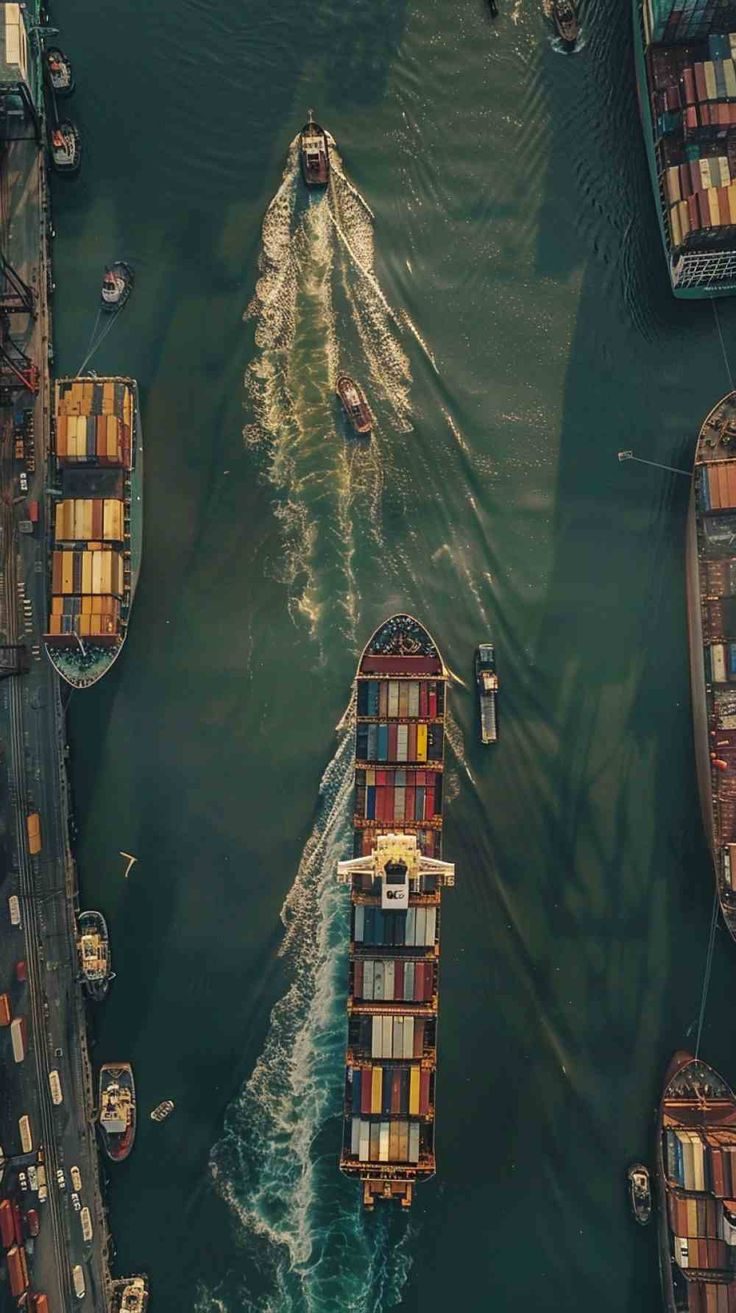
The schedule is the product
Container ships are managed to a timetable. Everything else — maintenance planning, crew changes, bunkering, dry docking — bends around a published schedule that a liner operator has sold to hundreds of shippers. That single constraint defines the segment.
Schedule reliability across the liner industry has been under sustained pressure. Xeneta data for December 2025 showed Far East–Mediterranean reliability at 28.8% against 45.3% in October 2023, and Far East–North Europe at 27.5% against 48.8%.
| Route | Oct 2023 reliability | Dec 2025 reliability | Change |
|---|---|---|---|
| Far East – Mediterranean | 45.3% | 28.8% | −16.5 pts |
| Far East – North Europe | 48.8% | 27.5% | −21.3 pts |
`[VERIFY]` Refresh these figures at publication — reliability moves quarterly.
For a ship manager, schedule pressure translates into specific operational consequences: less flexibility on maintenance windows, crew changes forced into whatever port the rotation allows, and constant pressure to increase speed to recover time — which is expensive in fuel and, since 2026, in emissions allowances.
What container ship managers actually manage
| Area | Detail |
|---|---|
| Reefer integrity | Plug availability, monitoring, pre-trip inspection, alarm response |
| Lashing and securing | Cargo Securing Manual compliance, lashing gear condition, inspection |
| Stability and stress | Bay planning inputs, GM limits, torsional stress on large boxships |
| Hatch covers and cell guides | Damage from box handling, alignment |
| Dangerous goods | IMDG stowage segregation, declaration verification support |
| Main engine reliability | Fixed schedule leaves little tolerance for breakdown |
| Bunkering to schedule | Stems must fit the rotation, not the market |
Reefers deserve particular attention. A single reefer failure on a high-value cargo can exceed a month's operating cost. Monitoring, alarm response procedures and plug maintenance are unglamorous and disproportionately valuable.
Misdeclared dangerous goods remain one of the most serious risks in the segment. The manager's role is procedural — verification support, stowage checks against the IMDG Code, and crew competence in fire response — but the consequences of failure are catastrophic and well documented.
Routing: a live cost problem
Suez container transits ran at around 120 in November 2025 against 583 in October 2023. Far East–Mediterranean actual transit times stretched from 34 days to 49, and Far East–North Europe from 40 to 52.
| Impact | Consequence for the manager |
|---|---|
| +12 to +15 days per voyage | Crew contract lengths, relief planning, provisions |
| Cape routing | Different weather regime, heavier hull fouling in warm water |
| More fuel per voyage | Higher CII exposure, higher ETS cost on in-scope legs |
| Fewer port calls per year | Fewer maintenance and crew change opportunities |
| War risk decisions | Crew consent, additional insurance, security measures |
Crew is the under-discussed piece. Extended voyages with fewer suitable crew change ports push seafarers toward the limits of their contracts, and MLC provisions on maximum service periods do not bend for routing decisions.
Emissions in the container segment
Container ships are large, fast and heavily EU-exposed, which makes them the most affected segment under EU ETS and FuelEU Maritime. With 100% of applicable emissions in scope from 2026 and methane and nitrous oxide now included, the allowance cost on a single Asia–Europe rotation is a material commercial number that has to be in the voyage economics before the fixture, not after.
FuelEU adds a second layer: GHG intensity against the 91.16 gCO₂e/MJ baseline, with penalties calculated on the compliance deficit. Fleets with LNG dual-fuel or biofuel-capable tonnage can pool balances across ships to reduce total exposure — an optimisation problem that grows with fleet size.
Speed: the lever that cuts both ways
Recovering a day of schedule costs fuel disproportionately, because power rises roughly with the cube of speed. A manager who is asked to make up time should be able to quantify the cost — in tonnes, in dollars, and now in allowances — and put that number in front of the commercial team before the decision is taken rather than after.
What to ask a container ship manager
- Reefer failure rate and mean time to response
- Lashing gear inspection cycle and condition reporting
- Main engine unplanned stoppage record, three years
- Crew change compliance rate under extended routings
- CII trajectory and the operating profile assumed
- EU ETS and FuelEU handling, including pooling strategy
- Bunker quality claim record and sampling discipline
- Fire-fighting readiness for container fires specifically, including boundary cooling drills
reliability, transit-time and Suez transit data from Xeneta, December 2025 — refresh before publication. Regulatory references to Directive (EU) 2023/959 and Regulation (EU) 2023/1805. Reviewed by the Zeaclub Editorial Team, 24 August 2026.
Frequently asked questions
Who manages container ships — the liner operator or a third party?
Both. Large liner operators run substantial in-house fleets, and they also charter tonnage from owners whose vessels are managed by third-party managers. The charterer sets the schedule; the manager keeps the ship able to meet it.
Why has schedule reliability fallen so far?
Principally routing disruption and the resulting port congestion and network imbalance. Reliability across major East–West routes has run well below pre-2020 levels for several years.
What is the biggest safety risk on a container ship?
Fire, particularly involving misdeclared dangerous goods or, increasingly, lithium-ion batteries in cargo. Detection and boundary cooling in deep bays are extremely difficult once a fire is established.
How does Red Sea routing affect crew?
Longer voyages, fewer suitable crew change ports, extended contracts, and — where transits are made — war-risk considerations that require informed consent and additional protective measures.